Internal Research Notes
Cross-functional Collaboration & Delivering User-Centric Experiences
Internal Research Notes helps users combine a firm's proprietary content with FactSet's company, market, and portfolio data to provide a complete research solution. It is a vast application — covering redefined existing workflows, GEN AI integration, and close collaboration with PMs, Engineering, UXR, Sales, and GEN AI teams.
Lead UX Designer. I was responsible for the end-to-end experience across multiple workstreams — from discovery and ideation through to prototyping, developer hand-off, and accessibility guidelines.
The current application's outdated UI presents challenges for users trying to efficiently manage and interact with research content. The project was handed off to me with an existing high-level framework, requiring me to deeply understand the domain, align with stakeholders, and deliver across several distinct experience areas simultaneously.
- Data volume for decision-making: Analysts deal with enormous amounts of research data and need faster, more intuitive ways to surface insights and act on them without context-switching.
- Outdated symbols workflow: The existing process for creating and managing symbols was cumbersome and inconsistent, leading to errors and low adoption of a core feature.
After mapping the problem space with stakeholders, I scoped three parallel workstreams to address the identified gaps:
- Insights & Decision-Making: Redesigning the dashboard and research views to reduce cognitive load and surface relevant data faster.
- GEN AI Integration: Designing patterns for AI-generated summaries and results within the research workflow.
- Symbols Workflow Redesign: Rethinking the Creating Symbol and Viewing Symbol experiences from the ground up.
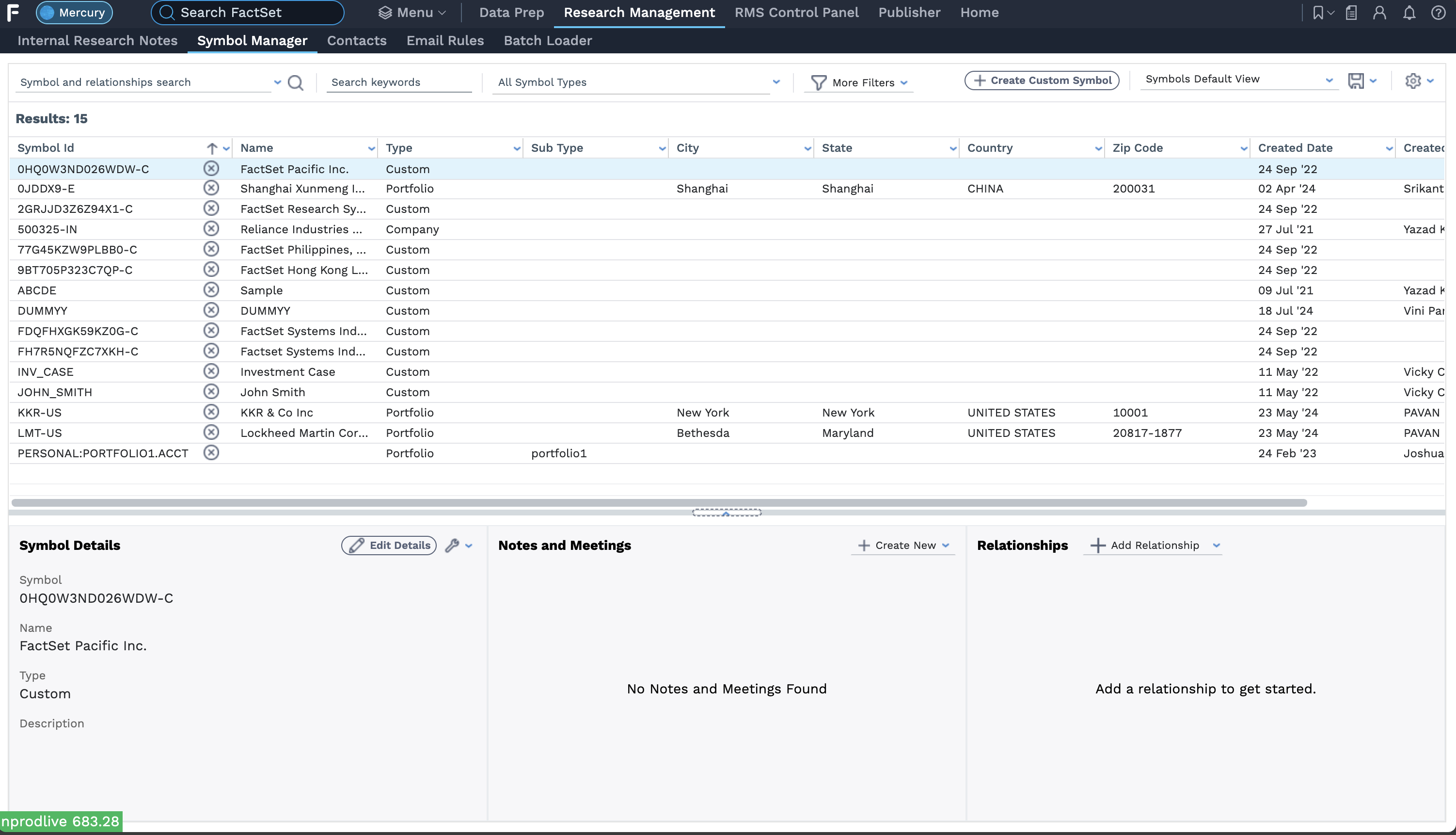
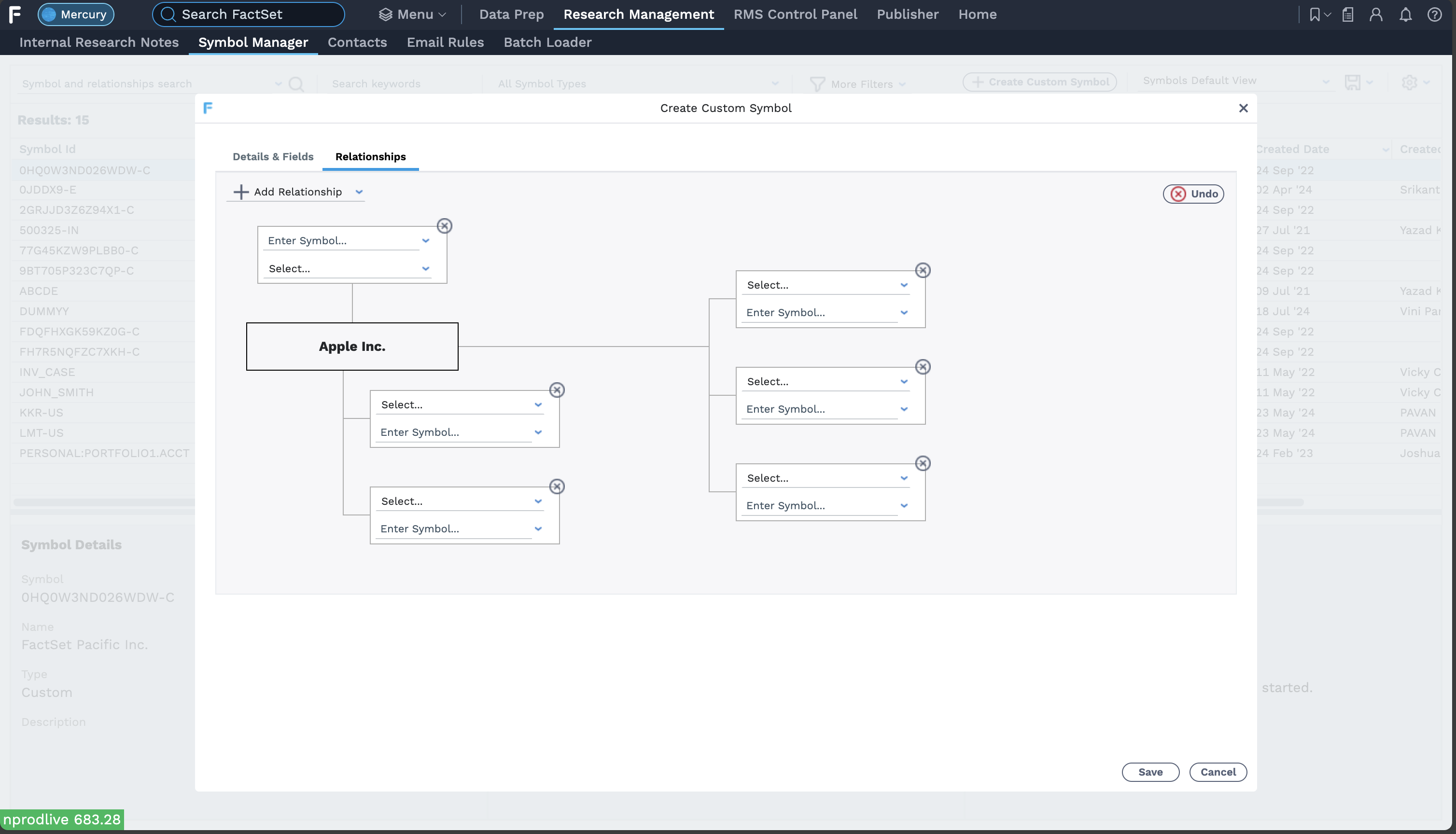
The existing symbol creation flow required multiple steps across disconnected screens, making it slow and error-prone. I redesigned the flow to be inline and contextual — reducing the number of actions and eliminating unnecessary navigation.
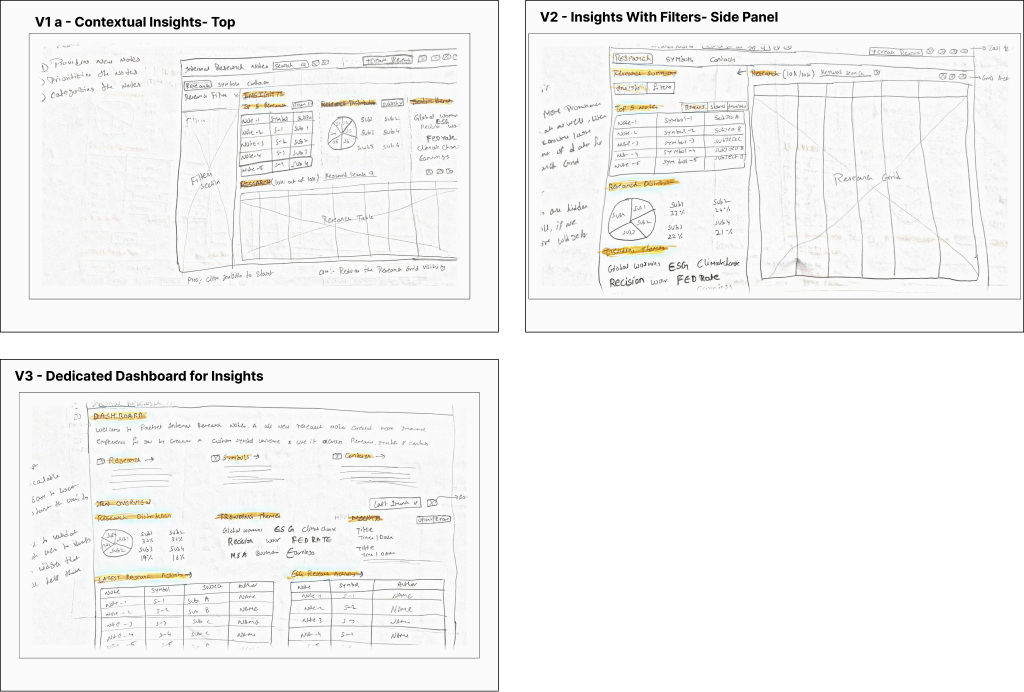
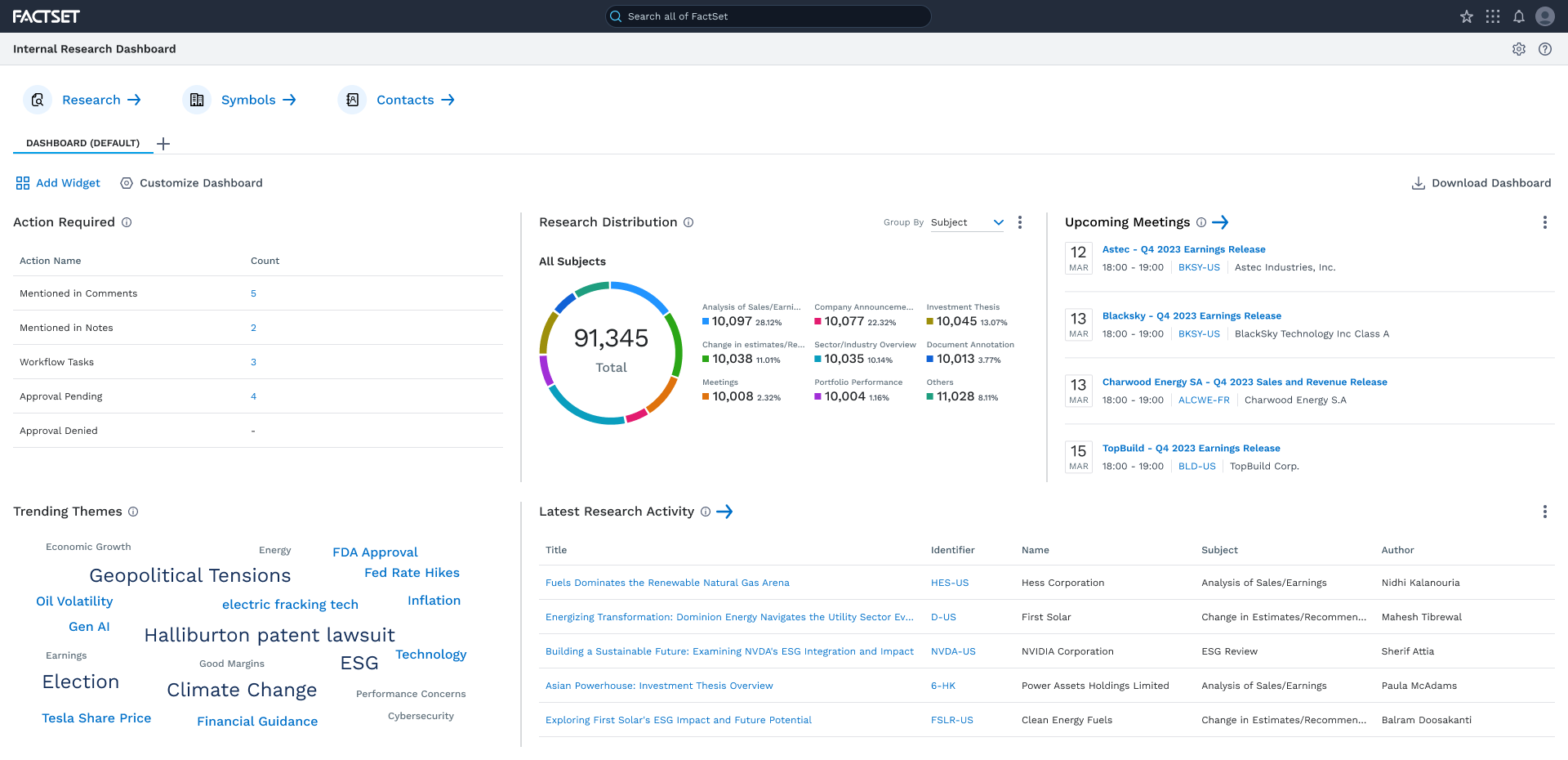
Analysts needed to rapidly assess research signals and act on them. The redesigned dashboard surfaces key insights prominently, with contextual actions available without leaving the current view.
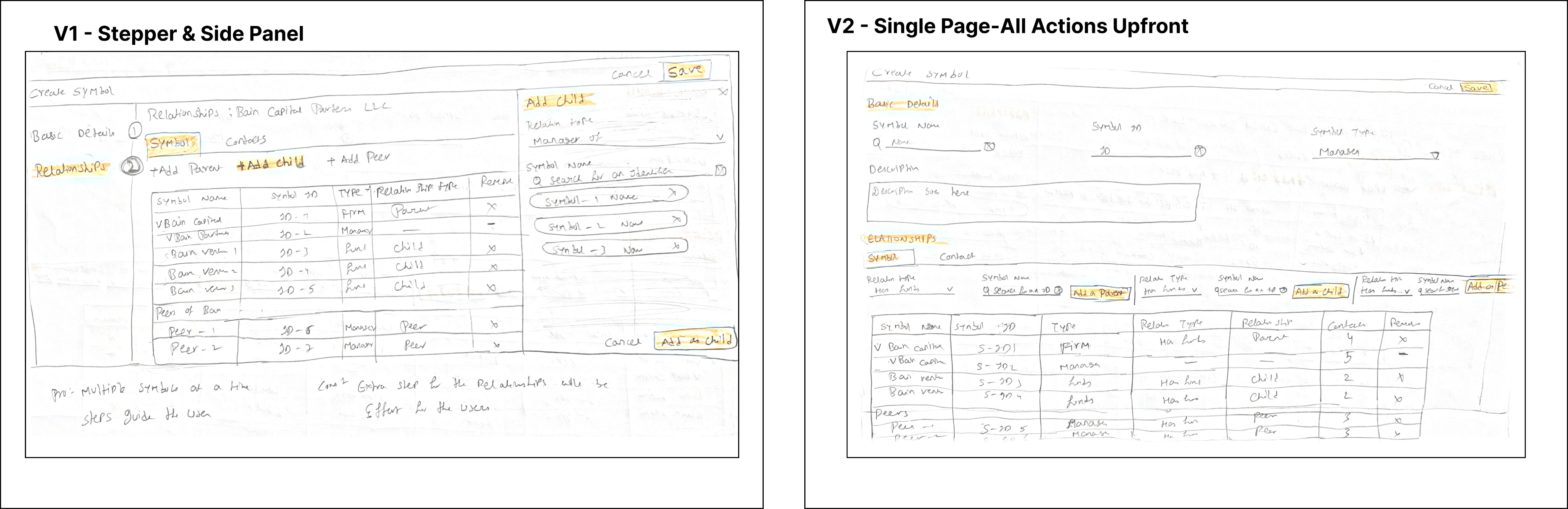
Updated designs aligned with the latest Fusion Design System guidelines. The create symbol flow was simplified — users can now add multiple symbols as peers or children in a single interaction.
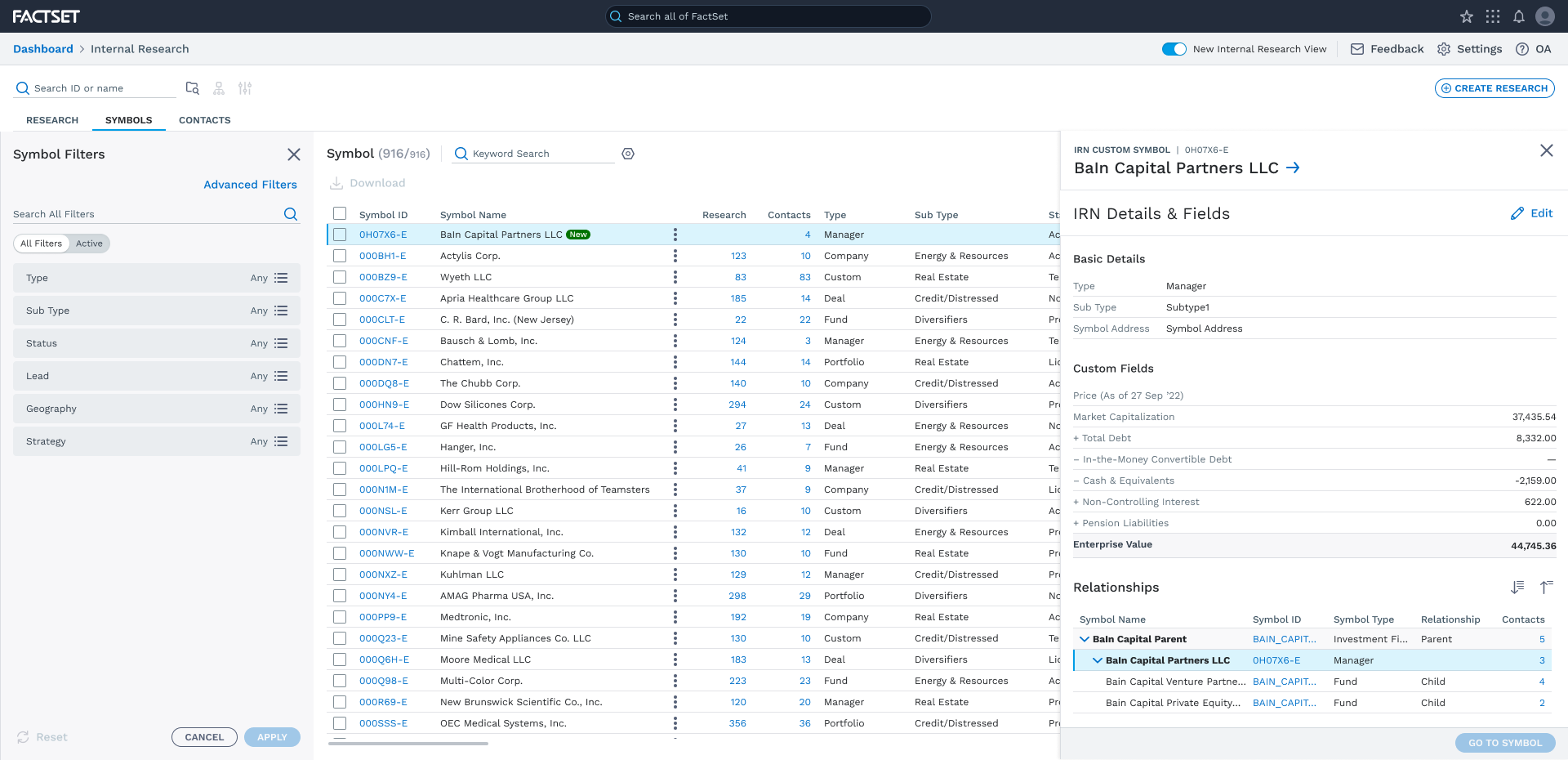
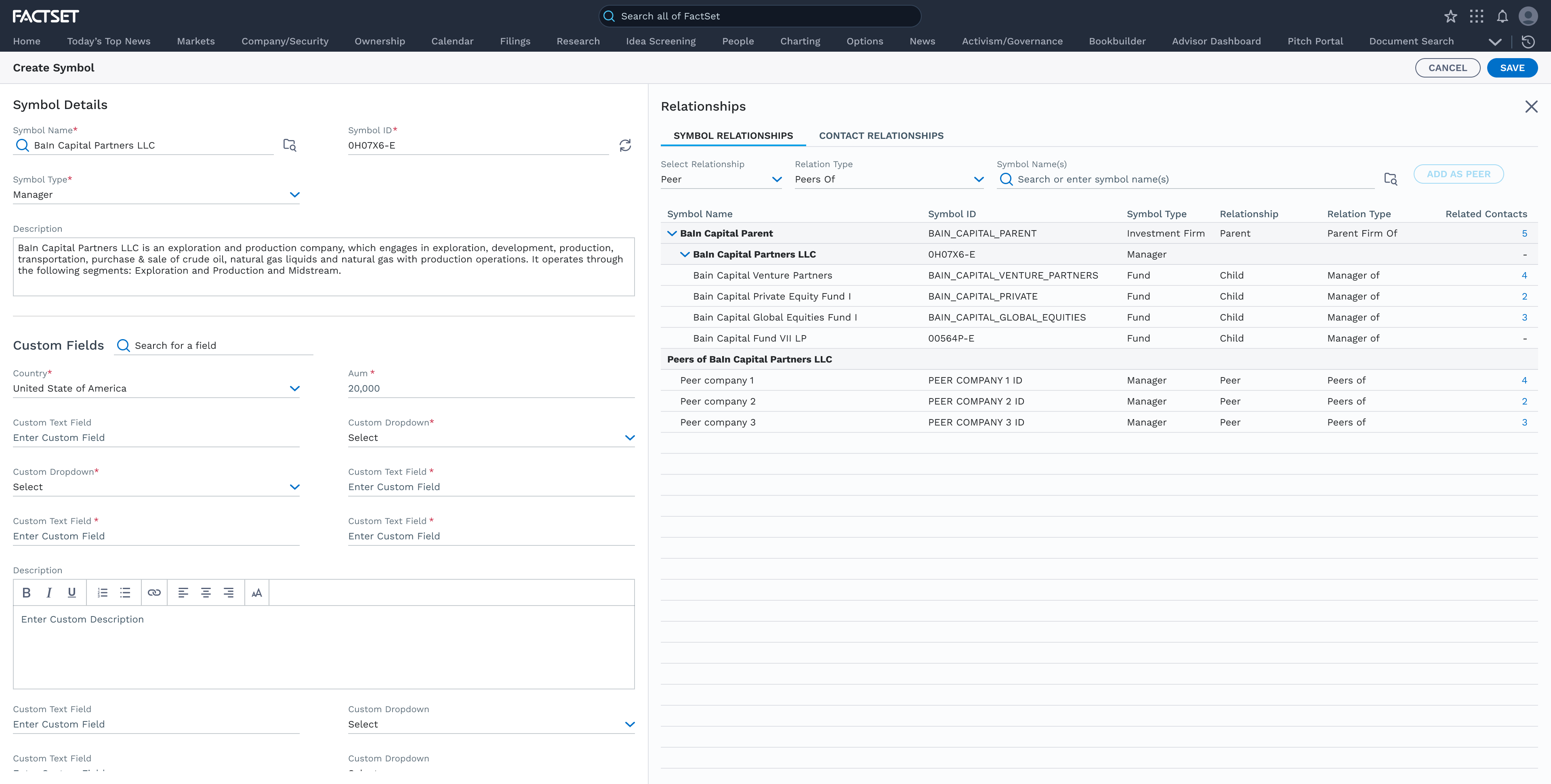
The new dashboard gives analysts an overview of their research coverage and helps identify trends at a glance. The Research ↔ Symbols panel provides contextual research data directly alongside symbol creation — eliminating the need to switch contexts.
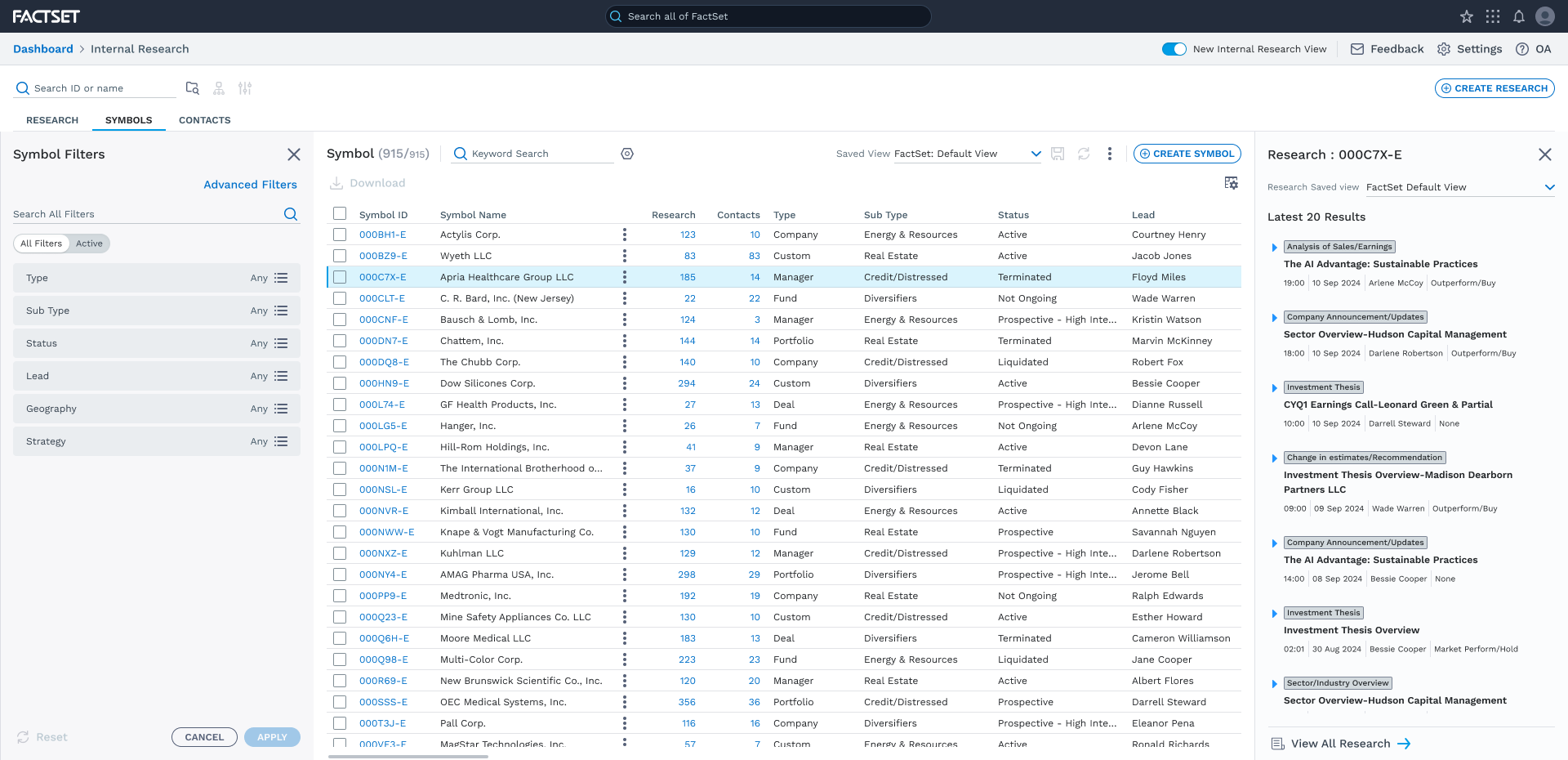
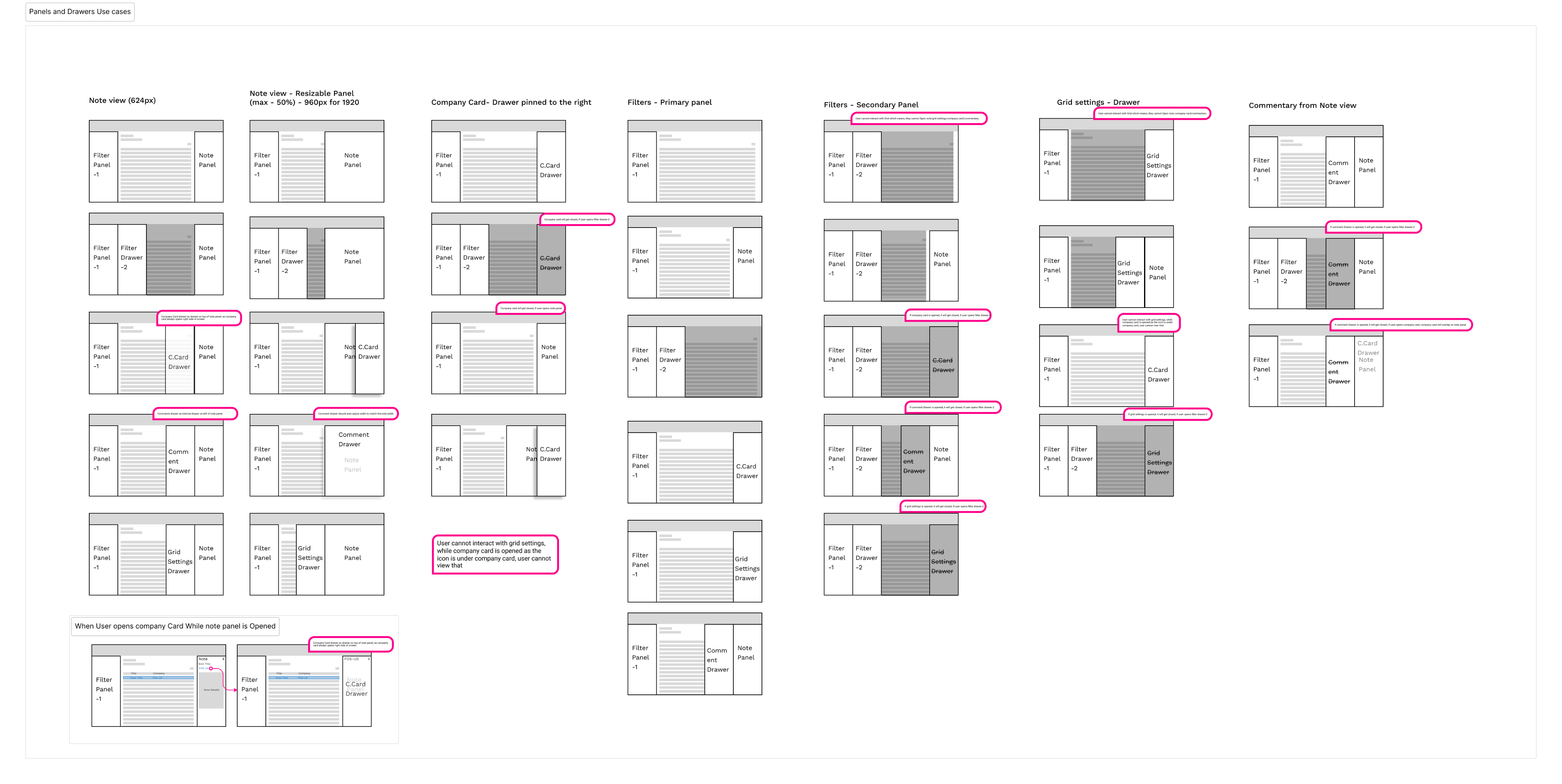
I created comprehensive hand-off documentation covering contextual panel behaviours and interaction states. Each use case was documented with annotated designs to ensure engineering had all the information needed to implement without ambiguity.
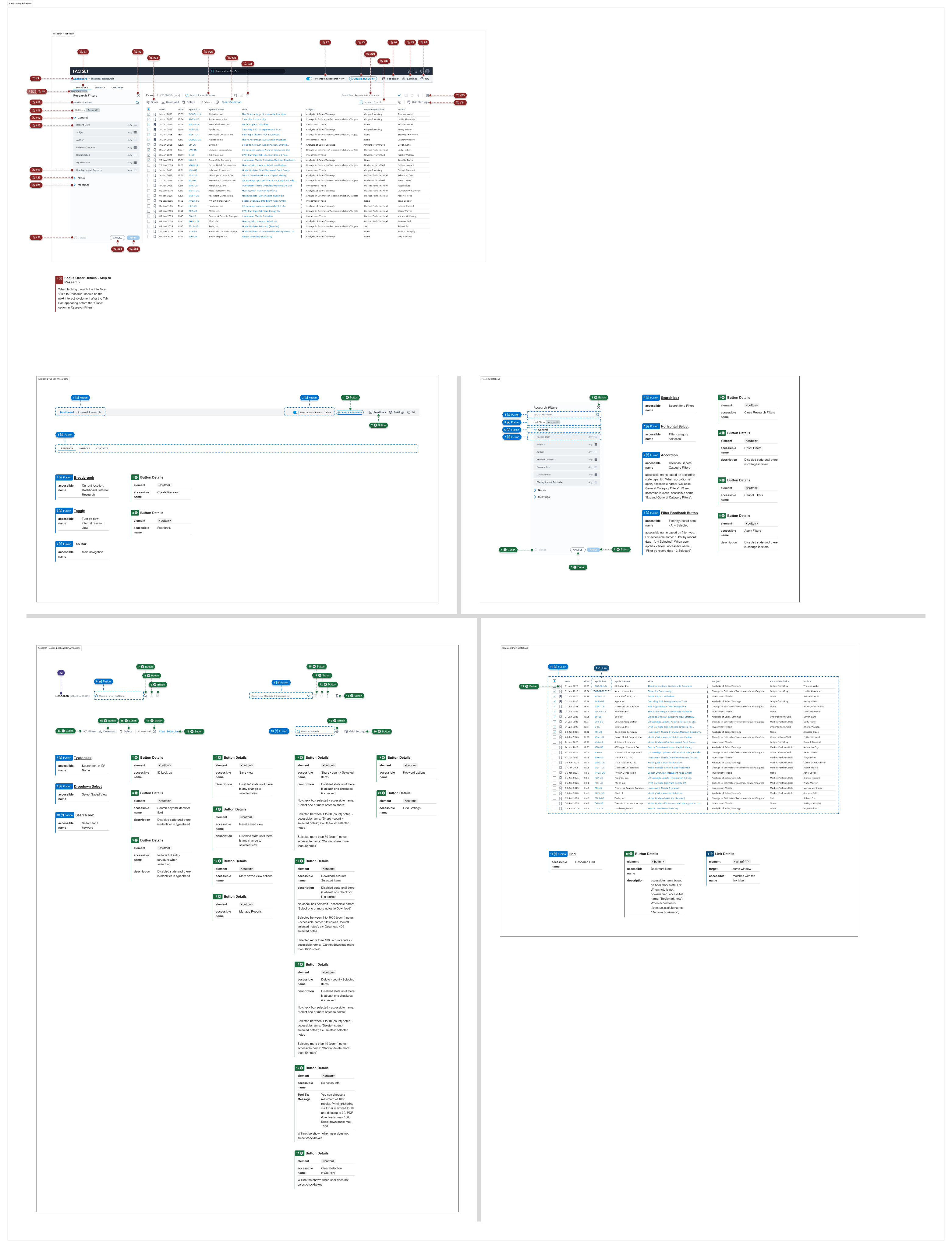
I delivered detailed accessibility guidelines covering tab order structure and ARIA naming conventions, ensuring the hand-off gave the development team a clear path to meeting WCAG requirements.
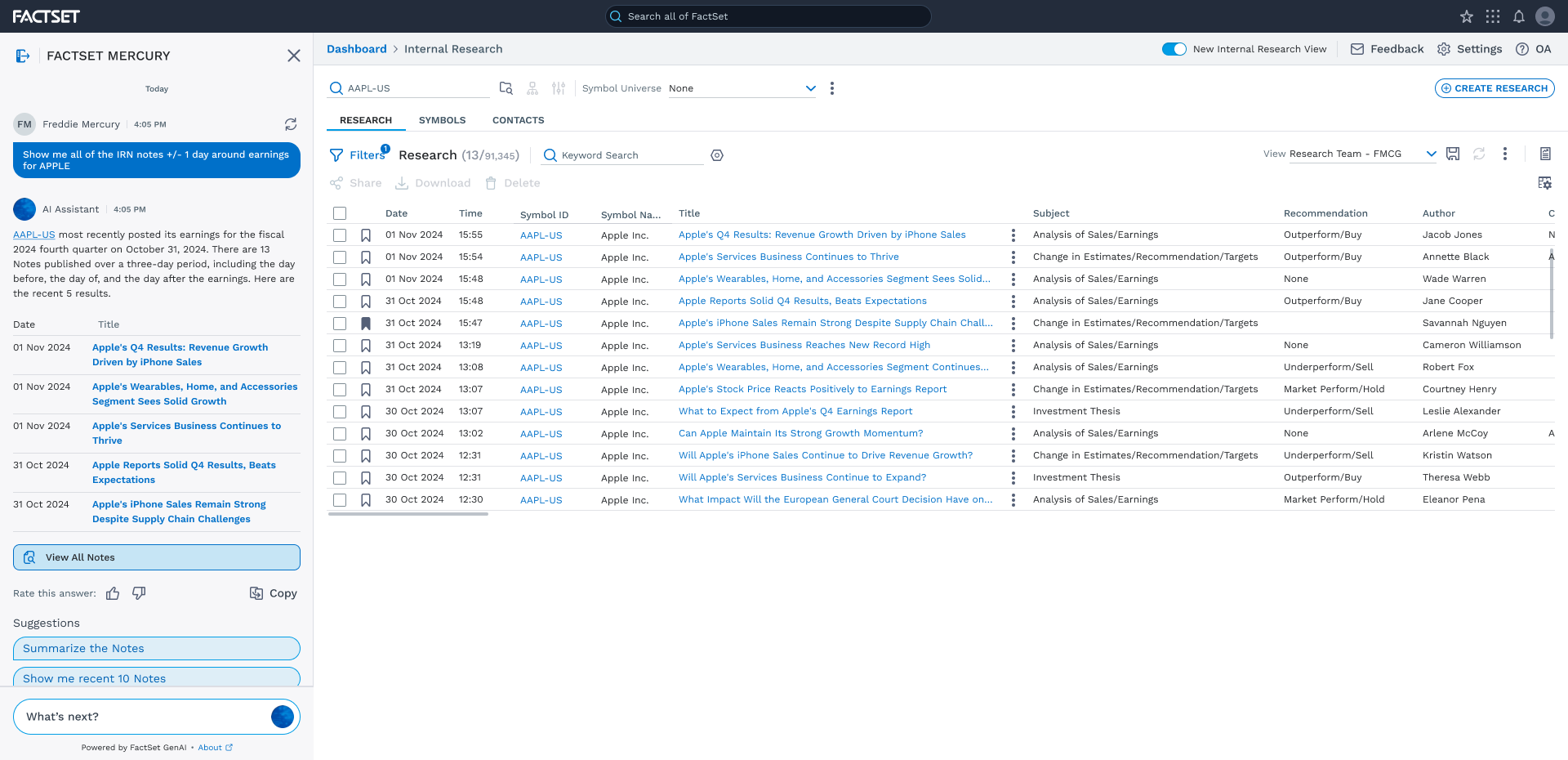
Designed AI result surfaces that present generated insights in a structured, scannable format — showing source citations and confidence signals so analysts can verify before acting.
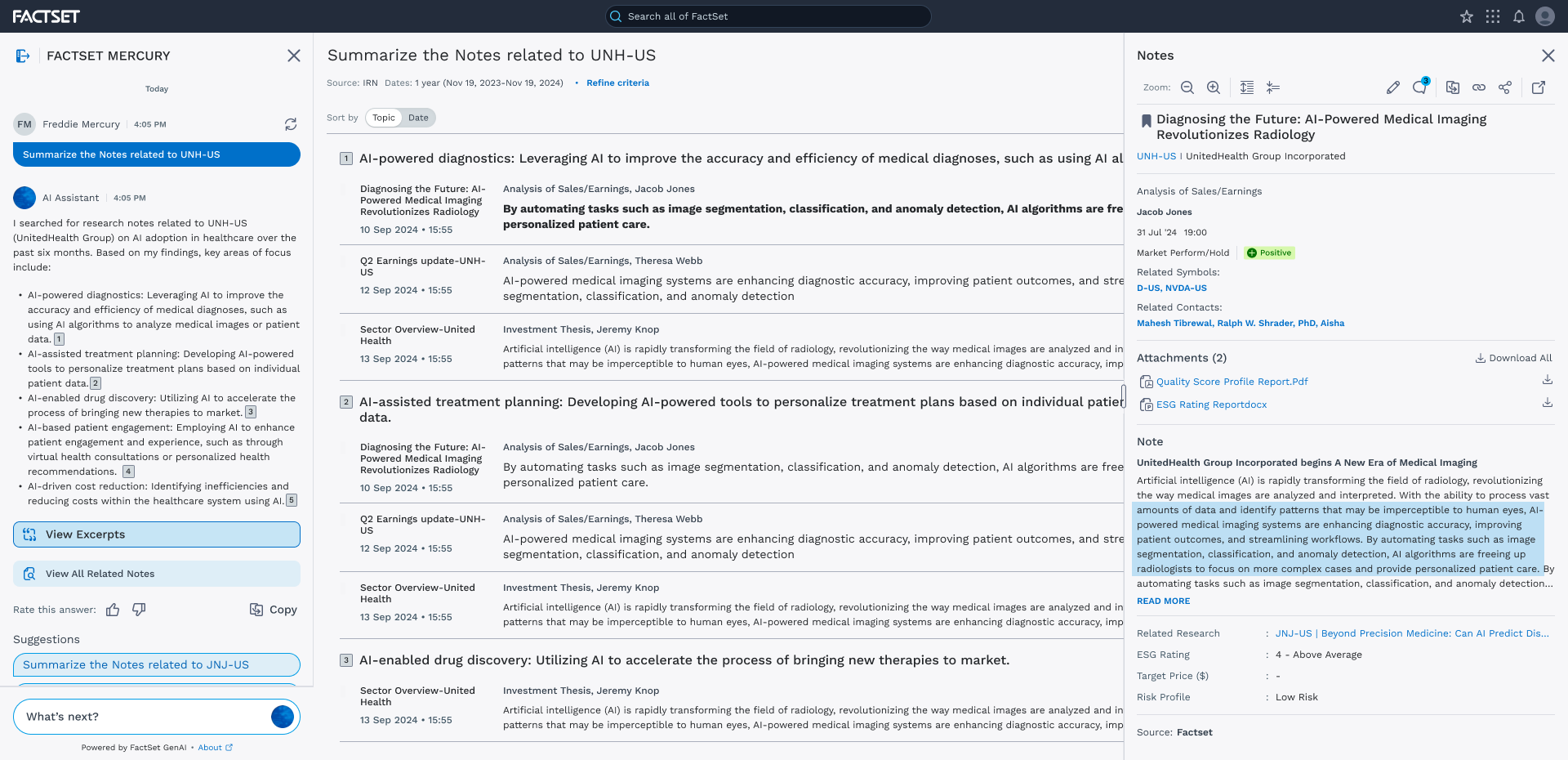
The generating summary pattern shows progressive disclosure of the AI's work — users see what's being processed and can interrupt or adjust before the final output is committed.
- Simplified symbol creation: Inline, contextual flow reduced the number of steps and eliminated cross-screen navigation — directly lowering error rates for a core feature.
- Faster decision-making: Redesigned dashboard surfaces key research signals prominently, reducing the time analysts spend hunting for insights across disconnected views.
- GEN AI patterns shipped: Structured AI result surfaces with source citations and confidence signals gave analysts a way to verify AI output before acting.
- Developer handoff without ambiguity: Annotated panel use cases and accessibility guidelines gave engineering a complete picture — reducing back-and-forth during implementation.
- WCAG compliance path established: Delivered tab order and ARIA naming guidelines that gave the development team a clear, actionable path to meeting accessibility requirements.
View Other Projects
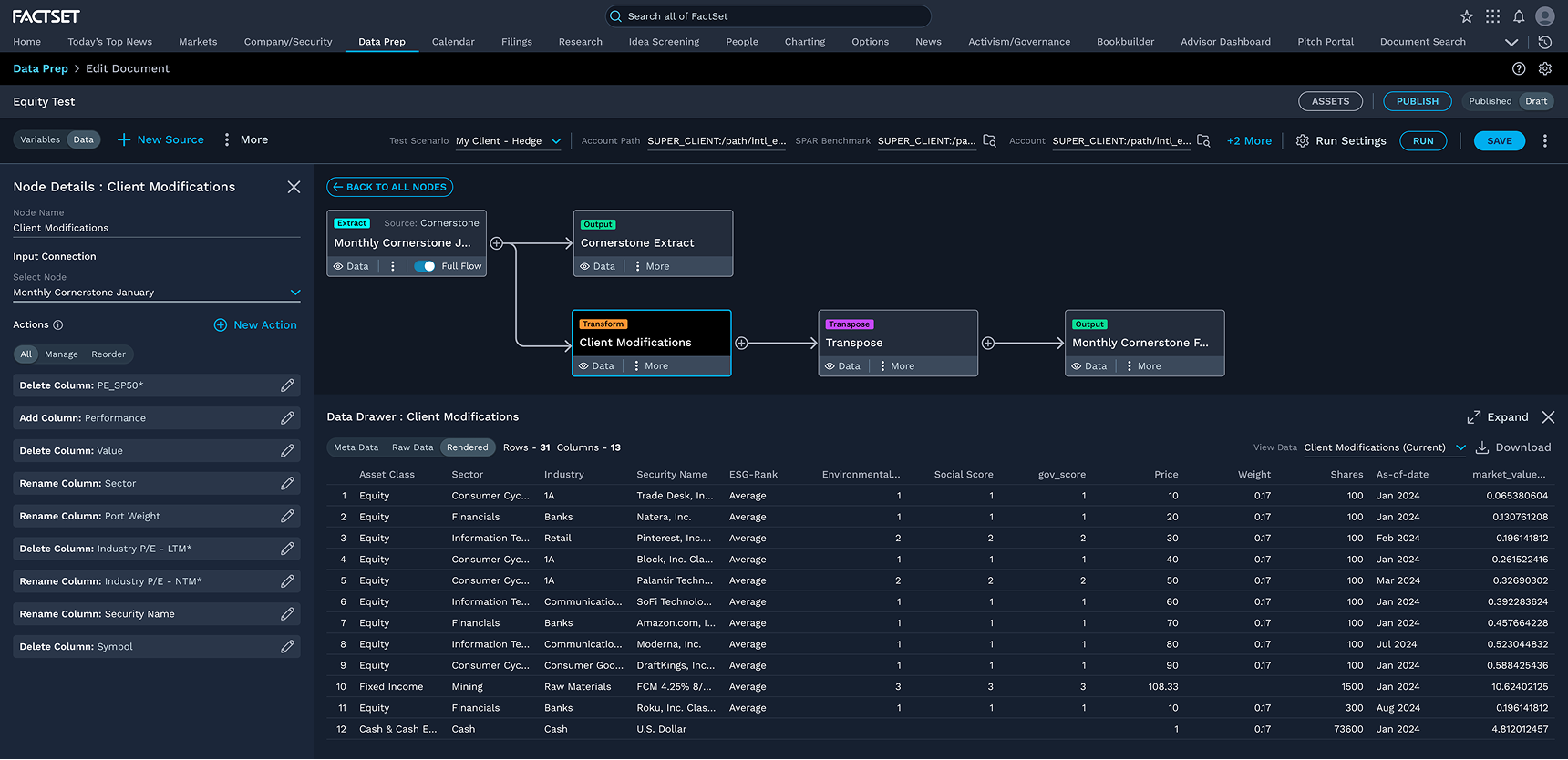
Data Prep
Redesigned engineering-implemented features to be more intuitive, validated through usability testing.
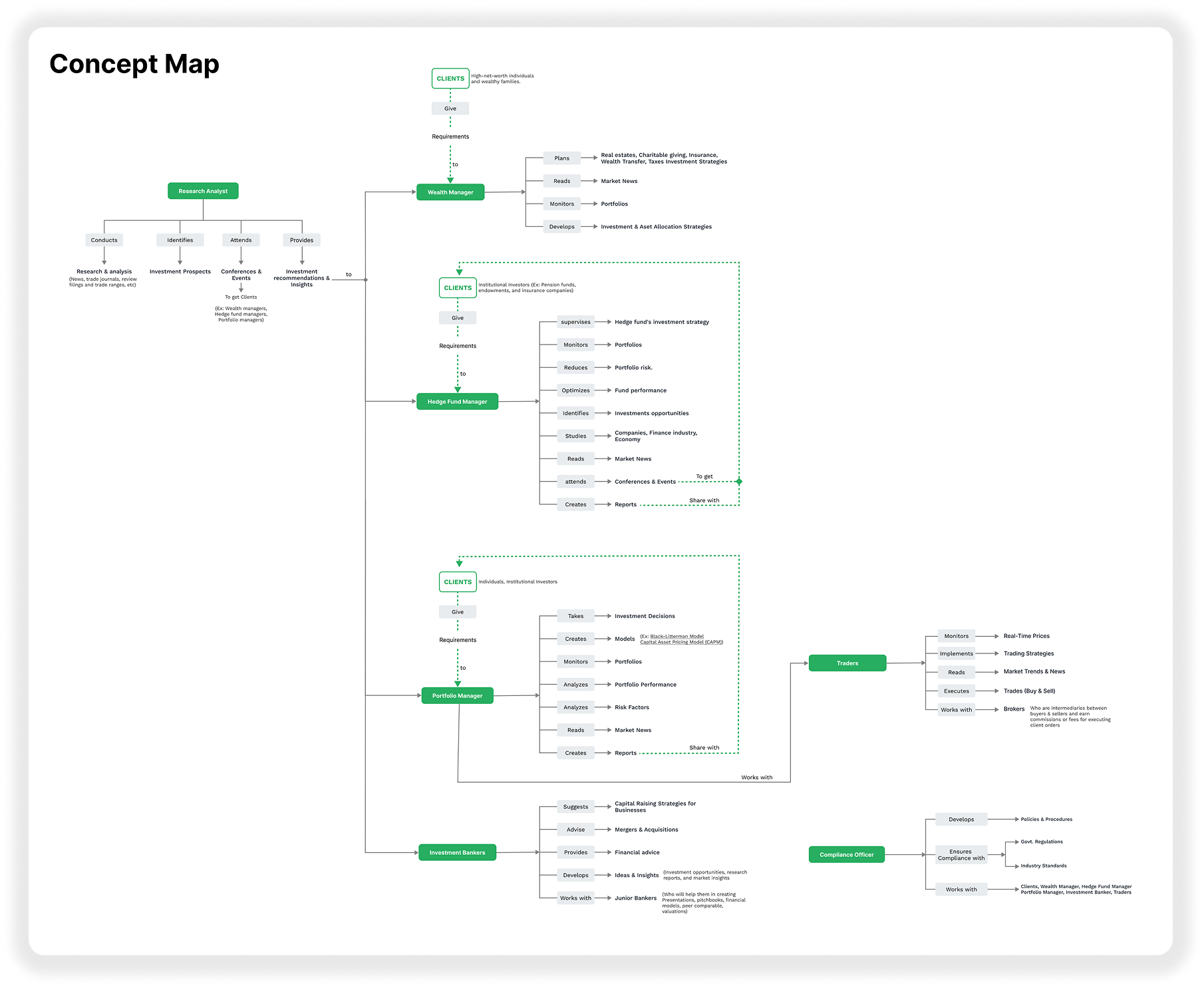
Concept Map & Competitive Analysis
Visual concept map for onboarding and competitive analysis driving FactSet navigation changes.